

Since arriving in Australia, I am being asked to work with schools a lot on responsive or adaptive teaching. This is a topic which is close to my heart, as I have written and spoken often about the dark days of differentiation lethally mutated and how, for kids like me, it was the unashamedly academic belief in me from my teachers which has led to me now sitting in an Assistant Prof role on the other side of the world. From small acorns do such lofty, oak tree sized dreams grow.

However, no matter how much I despair, I still speak to teachers who tell me that differentiation in its dodgiest form is an equity issue. That they are dumbing down the work to make it easier, missing whole bits out of plays and books because they are “too hard” or even more crazily, spending their evenings and weekends planning different tasks, activities etc for every student…make it stop!!!
Let’s start with the reality. I left school 3 weeks ago and I know that every classroom is variable. Students might encounter the same task but they do not come to it as equals. That is, they may have differing levels of prior knowledge, or working memory capacity. They may have a wider or less wide vocabulary, their reading fluency may differ and of course, they may also have learning needs. Herein lies the rub: every classroom is variable, so it seems natural to think that we need to differentiate by task, outcome or grouping. But I am here to say this is wrong-headed.
If we differentiate by outcome such as this:
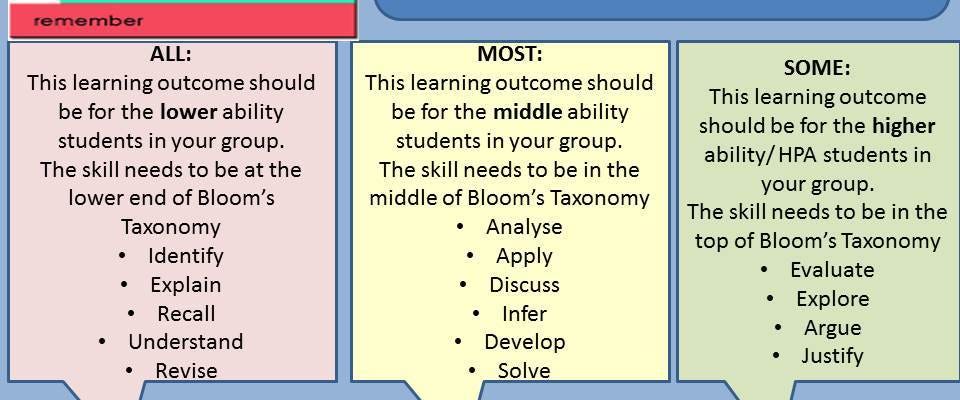
What message are we sending to our students? “You are a lower ability, so I expect less from you.” Pretty hideous actually. The funny thing is, that in my experience as a teacher, the students never even knew which one related to them anyway. So, they often asked me: “Miss, which one am I?” Imagine responding, “Oh, you are all love…don’t run before you can walk.”
The next is by task.
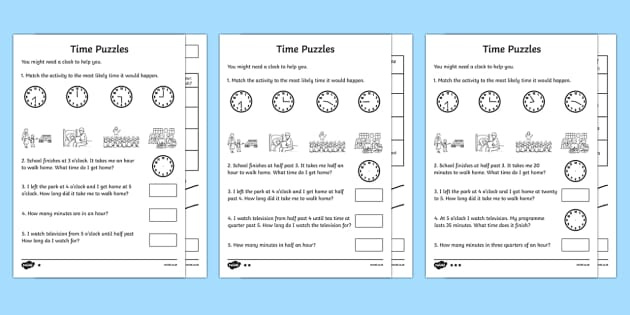
Teaching workloads are high enough without having to produce 3 sets of worksheets for every class we teach. Just bonkers.
Then the worst for me is by grouping students on tables with imaginative names, like prime ministers, so they don’t know they are on the low ability table. Except, they always do. If you are on the Liz Truss table, believe me, you know…

You may be a teacher reading this and thinking, well if classrooms are variable, how can I respond to difference without creating separate lessons for every learner? I truly believe responsive or adaptive teaching is the answer. This means placing much greater emphasis on keeping a common, ambitious curriculum and changing the support they receive. It is not about having different destinations for each student, it is about helping students reach the same destination. So, the challenge stays high and the support helps them get there.
The work of the Education Endowment Foundation is brilliant here and I would urge everyone in Australia to take a look at it. There is that dong, ‘You don’t know what you’ve got till it’s gone,’ and the EEF is definitely on my list now I am on the other side of the world. They talk about:
High-quality universal teaching for everyone.
Targeted adaptations where the evidence shows that they are needed.
So, it is the idea that responsive teaching begins with high expectations and then teachers scaffold, craft explanations, model and provide opportunities for practice with gradual release, so that they do not need to reduce the intellectual demand of what they are teaching.
There are three stages to this, and Alex Quigley writes about this beautifully:
Anticipate: Predict barriers, plan scaffolds and know starting points
Notice: CfU and scan the room, spot misconceptions, circulate during independent work
Respond: Adjust by re-teaching, changing pace, adding scaffold, modelling etc
That brings me nicely to scaffolding. Scaffolding is a temporary support which can help pupils to succeed before it is taken away. Some of that support might be heavy such as paragraph plans, some might be medium such as sentence starters, or some might be light such as word banks. The key is that we are aiming for independence, so at some point, the goal is for students not to need the scaffold anymore. I have definitely fallen into the trap of not taking these away early enough, when I have had year 11 students asking me for sentence starters the day before an exam. Rachel Ball and Alex Fairlamb have a brilliant line about this in their book, ‘The Scaffolding Effect,’ ‘if a scaffold is never removed, it is not a scaffold, it is a lesson plan.’
Scaffolds can be generic, but they can also be highly subject specific and one of the best uses of shared subject time is spending it sharing great examples of domain specific scaffolding for tricky tasks.
One of the biggest criticisms I hear of this type of responsive teaching is that it ignores the individual needs of those students who may need more support or have a SEND. Again, I would point people towards the recent publication from the EEF on inclusive teaching. They recommend that teachers should start with strong universal provision (eg. Clear explanations, predictable routines, explicit vocabulary teaching, well-sequenced modelling, frequent checks for understanding and accessible resources) but then apply targeted adaptations based on actual barriers and live responses in class.
Essentially, responsive teaching has a simple commitment at its heart: keep the learning ambitious. Change support when the evidence demands it.
You can hear me talking about this in more depth in a webinar I did for Academica University of Applied Sciences here:
I’m a UK trained teacher currently visiting Australia and I’m a big fan of the EEF. I believe that differentiation at its best was adaptive teaching by another name. Aim high for all, scaffold as needed. But somewhere along the line this became worksheets for ‘upper, middle, lower.’ How did this happen?
Thoughts of differentiation bring me out in a cold sweat! Aim high, everyone. Support who needs it but keep pushing and showing kids you believe they can get there. I am trying a couple of things next term to vary the scaffolds available so they are most likely to match the task.